The impacts of volcanic activity
30 October 2026

30 October 2026
● Along oceanic ridges;
● On or near subduction zones;
● Associated with rift valleys;
● Over hot spots.
Where is a volcanic activity found at?
 Learning outcomes:
 To be able to:
 Where are we on our specification? Prior learning: Key words:
StarterPaired/small group discussion |
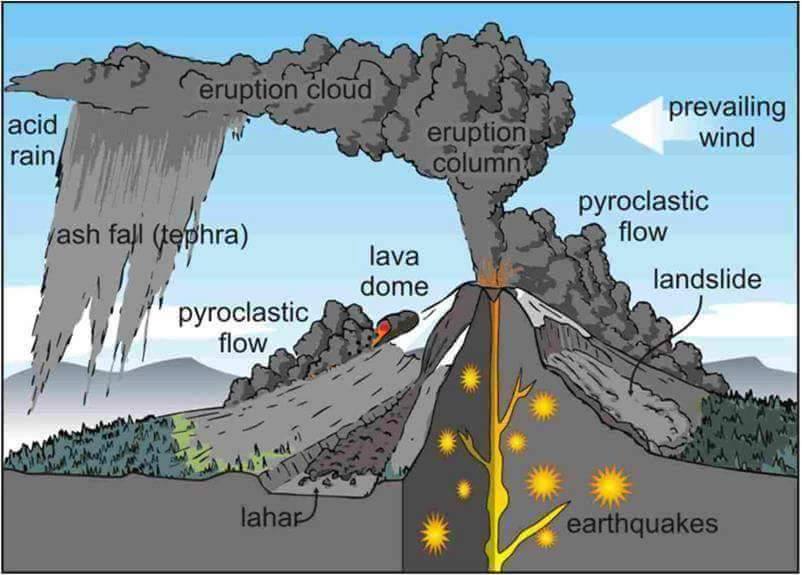
Impact of volcanic hazards:○ Primary hazards (impacts) • Tephra - solid material of varying grain size ranging frovolcanic bombs to ash, all ejected into the atmosphere. |
Impact of volcanic hazards:○ Primary hazards (impacts) • Tephra - solid material of varying grain size ranging from volcanic bombs to ash, all ejected into the atmosphere. • Pyroclastic flows ( nuées ardentes)
- very hot (over 800°C), gas charged, high-velocity flows made up of a mixture of gas and tephra. |
Impact of volcanic hazards:○ Primary hazards (impacts) • Tephra - solid material of varying grain size ranging frovolcanic bombs to ash, all ejected into the atmosphere.
- very hot (over 800°C), gas charged, high-velocity flows made up of a mixture of gas and tephra.
– Molten rock (magma) flowing onto the surface. |
Impact of volcanic hazards:○ Primary hazards (impacts) • Tephra - solid material of varying grain size ranging frovolcanic bombs to ash, all ejected into the atmosphere.
- very hot (over 800°C), gas charged, high-velocity flows made up of a mixture of gas and tephra. - Lava
- include carbon dioxide, carbon monoxide, hydrogen sulphide, sulphur dioxide
and chlorine. |
Impact of volcanic hazards:○ Primary hazards (impacts) • Tephra - solid material of varying grain size ranging frovolcanic bombs to ash, all ejected into the atmosphere.
- very hot (over 800°C), gas charged, high-velocity flows made up of a mixture of gas and tephra. - Lava
- include carbon dioxide, carbon monoxide, hydrogen sulphide, sulphur dioxide
and chlorine. ○ Secondary hazards (impacts) - melted snow and ice as a result of the eruption combined with volcanic ash forms mud flows that can move down the course of river valleys at high speeds. |
Impact of volcanic hazards:○ Primary hazards (impacts) • Tephra - solid material of varying grain size ranging from volcanic bombs to ash, all ejected into the atmosphere.
- very hot (over 800°C), gas charged, high-velocity flows made up of a mixture of gas and tephra. - Lava
- include carbon dioxide, carbon monoxide, hydrogen sulphide, sulphur dioxide
and chlorine. ○ Secondary hazards (impacts) - melted snow and ice as a result of the eruption combined with volcanic ash forms mud flows that can move down the course of river valleys at high speeds. • Flooding - when an eruption melts glaciers and ice caps, serious flooding can result. |
Impact of volcanic hazards:○ Primary hazards (impacts) • Tephra - solid material of varying grain size ranging frovolcanic bombs to ash, all ejected into the atmosphere.
- very hot (over 800°C), gas charged, high-velocity flows made up of a mixture of gas and tephra. - Lava
- include carbon dioxide, carbon monoxide, hydrogen sulphide, sulphur dioxide
and chlorine. ○ Secondary hazards (impacts) - melted snow and ice as a result of the eruption combined with volcanic ash forms mud flows that can move down the course of river valleys at high speeds. • Flooding - when an eruption melts glaciers and ice caps, serious flooding can result. - Volcanic Landslides. |
Impact of volcanic hazards:○ Primary hazards (impacts) • Tephra - solid material of varying grain size ranging from volcanic bombs to ash, all ejected into the atmosphere.
- very hot (over 800°C), gas charged, high-velocity flows made up of a mixture of gas and tephra. - Lava
- include carbon dioxide, carbon monoxide, hydrogen sulphide, sulphur dioxide
and chlorine. ○ Secondary hazards (impacts) - melted snow and ice as a result of the eruption combined with volcanic ash forms mud flows that can move down the course of river valleys at high speeds. • Flooding - when an eruption melts glaciers and ice caps, serious flooding can result. - Volcanic Landslides. • Tsunamis
- sea waves generated by violent volcanic eruptions such as those formed after the eruption of Krakatoa (Indonesia) in 1883. |
Impact of volcanic hazards:○ Primary hazards (impacts) • Tephra - solid material of varying grain size ranging from volcanic bombs to ash, all ejected into the atmosphere.
- very hot (over 800°C), gas charged, high-velocity flows made up of a mixture of gas and tephra. - Lava
- include carbon dioxide, carbon monoxide, hydrogen sulphide, sulphur dioxide
and chlorine. ○ Secondary hazards (impacts) - melted snow and ice as a result of the eruption combined with volcanic ash forms mud flows that can move down the course of river valleys at high speeds. • Flooding - when an eruption melts glaciers and ice caps, serious flooding can result. - Volcanic Landslides. • Tsunamis
- sea waves generated by violent volcanic eruptions such as those formed after the eruption of Krakatoa (Indonesia) in 1883. - volcanoes emit gases which include sulphur. When this combines with atmospheric moisture, acid rain results. |
Impact of volcanic hazards:○ Primary hazards (impacts) • Tephra - solid material of varying grain size ranging from volcanic bombs to ash, all ejected into the atmosphere.
- very hot (over 800°C), gas charged, high-velocity flows made up of a mixture of gas and tephra. - Lava
- include carbon dioxide, carbon monoxide, hydrogen sulphide, sulphur dioxide
and chlorine. ○ Secondary hazards (impacts) - melted snow and ice as a result of the eruption combined with volcanic ash forms mud flows that can move down the course of river valleys at high speeds. • Flooding - when an eruption melts glaciers and ice caps, serious flooding can result. - Volcanic Landslides. • Tsunamis
- sea waves generated by violent volcanic eruptions such as those formed after the eruption of Krakatoa (Indonesia) in 1883. - volcanoes emit gases which include sulphur. When this combines with atmospheric moisture, acid rain results. - the ejection of huge amounts of volcanic debris into the atmosphere can reduce global temperatures and is believed to have been an agent in past climatic change. |
Management of the volcanic hazardDiscuss the following terms in relation to managing volcanic hazards, and suggest examples of each:
|
Impact of volcanic hazards:Using Figure 1 and your own knowledge, discuss to what extent can volcanic events be managed effectively. (9 marks)
|
Exam question practice |
Ⓐ Melted snow and ice as a result of the eruption combined with volcanic ash forms mud flows that can move down the course of river valleys at high speeds is called Tephra. True or False
Ⓑ The solid matter ejected by a volcano into the air is called Lahars. True or False
Ⓒ Lava is molten rock (magma) flowing onto the surface. True or False
Ⓓ Pyroclastic flows (also known as Nuées ardentes), is formed from a mixture of hot gas (over 800°C) and tephra. True or False
Ⓔ After ejection from the volcano Nuées ardentes can flow down the sides of a mountain at speeds of over 70 km per hour. True or False
Watch the lecture event ‘Open Minds – Studying the Impact of Volcanoes’ from the OU - https://slaveevo.com/goto/?ai=3164. What impacts are shown?
Environmental?
Economic?
Political?
|
|