Understand that most volcanic activity
is associated with plate tectonic
processes and occurs along plate
boundaries.
Describe the distribution of volcanic
activity as being mainly associated with:
• ocean ridges and sea floor spreading
• destructive plate boundaries and
subduction zones
• rift valleys
• intraplate vulcanicity – hot spots
Most volcanic activity is associated with plate tectonic processes and is mainly located along plate margins. At which sites is volcanic activity therefore found?
Starter
Most volcanic activity is associated with plate tectonic processes and is mainly located along plate margins. At which sites is volcanic activity therefore found?
Along oceanic ridges;
On or near subduction zones;
Associated with rift valleys;
Over hot spots.
Volcanic activity found at:
● Along oceanic ridges:
- where plates are moving
apart and magma is forcing its way to the surface, cooling and forming new crust.
Volcanic activity found at:
● Along oceanic ridges:
- where plates are moving
apart and magma is forcing its way to the surface, cooling and forming new crust.
- fairly gentle sides because of the low viscosity of the basaltic lava
- eruptions are frequent but relatively
gentle (effusive).
Volcanic activity found at:
● On or near subduction zones:
Use the textbooks to research (Page 194).
Volcanic activity found at:
● Associated with rift valleys:
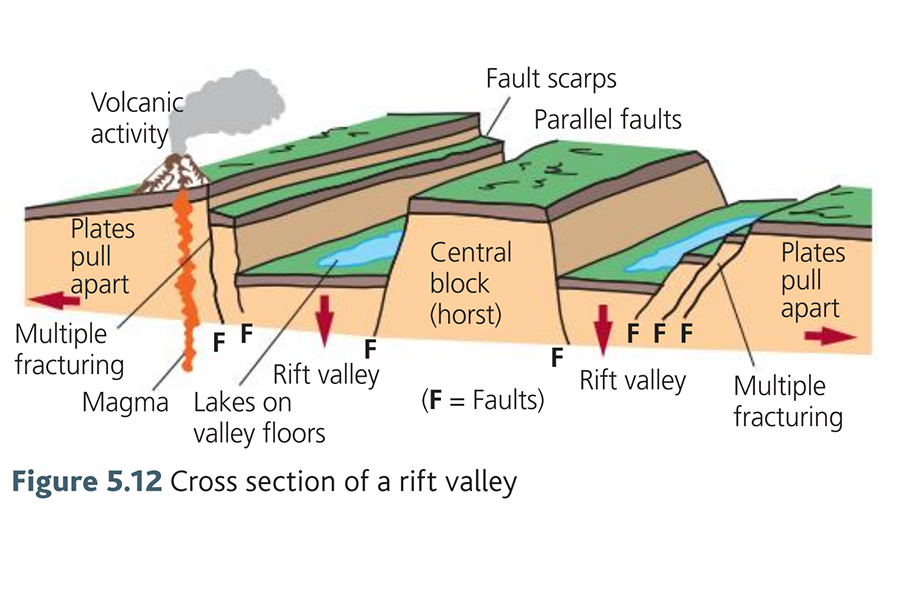
At constructive margins in continental areas such as east Africa, the brittle crust fractures as sections of it move
apart. Areas of crust drop down between parallel faults to form rift valleys (Figure 5.12).
Use the textbooks to research (Page 194).
Volcanic activity found at:
● Over hot spots:
A hot spot is an area on Earth that exists over a mantle plume.
A mantle plume is an area under the rocky outer layer of Earth, called the crust, where magma is hotter than surrounding magma. Heat from this extra hot magma causes melting and thinning of the rocky crust, which leads to widespread volcanic activity on Earth’s surface above the plume.
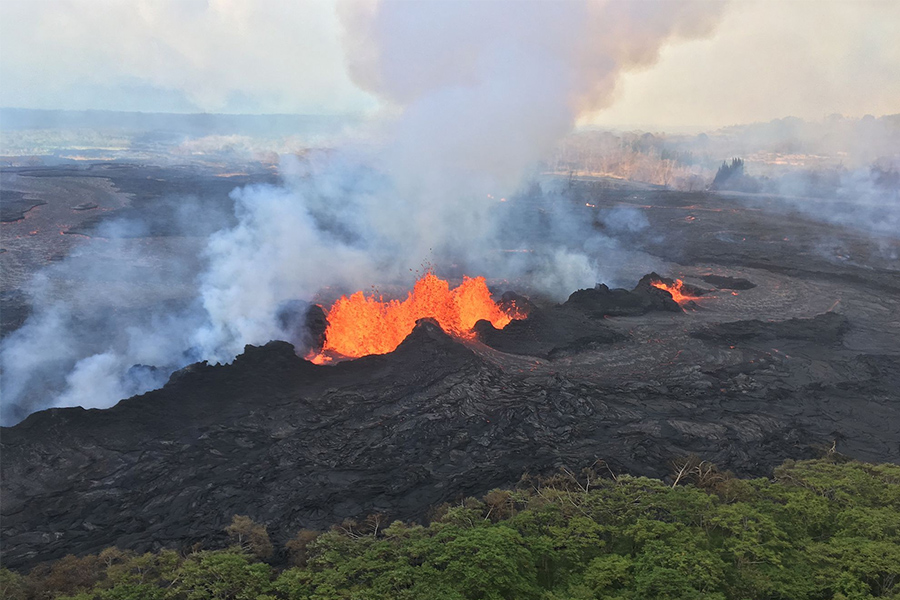
HAWAII'S LAVA FLOW IS A MESMERIZING FORCE
The Kīlauea volcano is one of the world's most active and has been erupting since 1983. This footage from 2016 shows its slow moving lava.
Task
Explain the nature and distribution of volcano on or near subduction zone. [4 marks] ⓘ
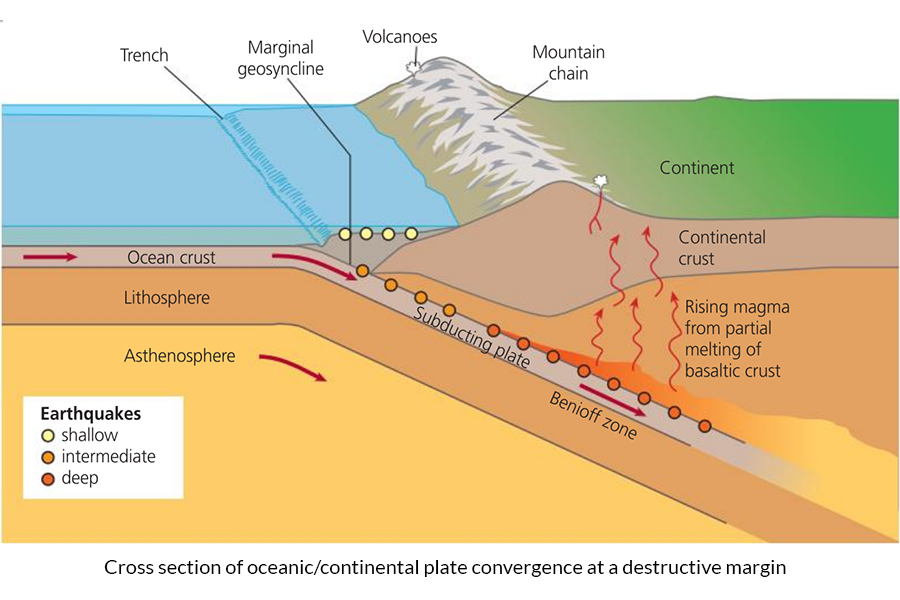
On or near subduction zones: The line of volcanoes, or ‘ring of fire’ that surrounds the Pacific Ocean is associated with plate subduction. The deeper the oceanic plate descends, the hotter the surroundings become. This, together with the heat generated from friction, begins to melt the oceanic plate into magma in a part of the subduction zone known as the Benioff zone. As it is less dense than the surrounding material, this molten magma begins to rise as plutons of magma. Eventually, these reach the surface and form volcanoes (Figure 5.11). The andesitic lava, which has a viscous nature (flows less easily), creates complex, composite and explosive volcanoes (compared with the basaltic emissions on constructive margins). If the eruptions take place offshore, a line of volcanic islands known as an island arc can appear, for example, the West Indies. Island arcs can also occur when oceanic plates meet and one is forced under the other, with the consequent subduction processes taking place. On the western side of the Pacific Ocean, the Pacific plate is being dragged beneath the smaller Philippines plate. A line of volcanic islands including Guam and the Marianas has been formed from magma upwelling from the Benioff zone.
Review
Volcanic activity is found at:
● Along oceanic ridges;
● On or near subduction zones;
● Associated with rift valleys;
● Over hot spots.
Homework
Warning: Trying to access array offset on null in /home/www/public/teach/lesson.php on line 350
Map
Warning: Trying to access array offset on null in /home/www/public/teach/lesson.php on line 361

 Learning outcomes:
 To be able to:
 Where are we on our specification?

 Use the textbooks to research (Page 194).