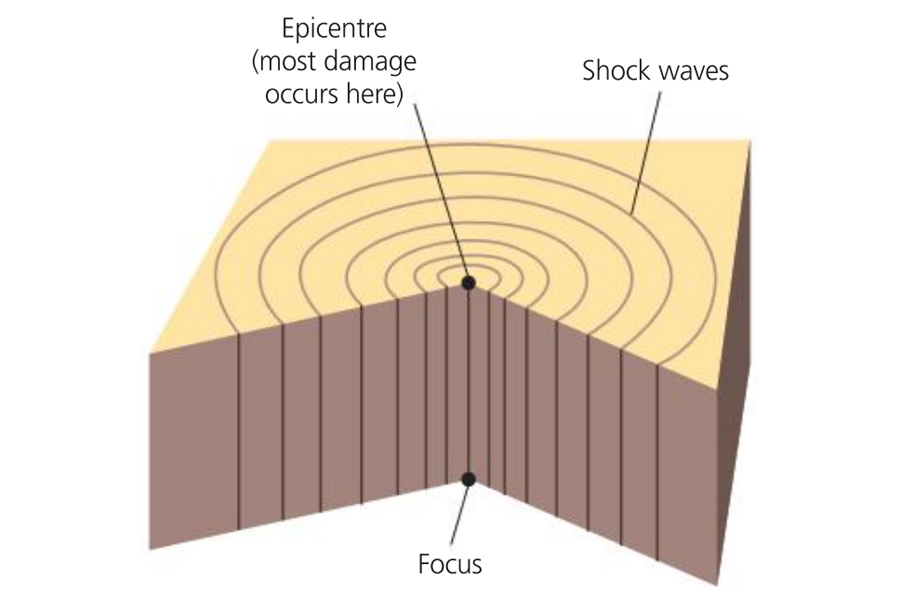
– As the crust of the Earth is constantly moving, there tends to be a slow build up of stress within the rocks. When this pressure is released, parts of the surface experience, for a short period, an intense shaking motion.
focus - the point at which this pressure release occurs within the crust
● shallow focus (0–70 km deep): these tend to cause the greatest damage and account for 75 per cent of all the earthquake energy released
● intermediate focus (70–300 km deep)
● deep focus (300–700 km deep)
epicentre - the point immediately above that on the earth’s surface
Nature and distribution
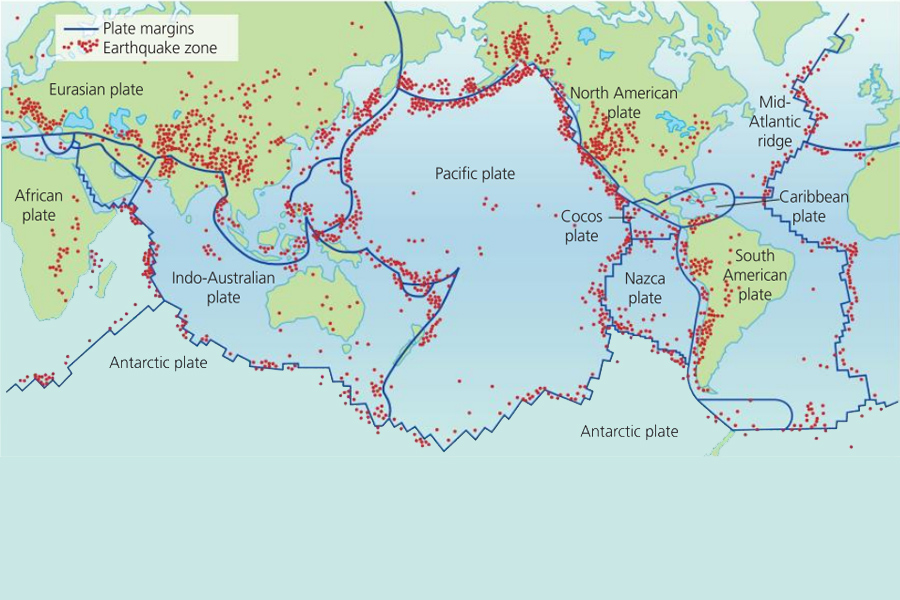
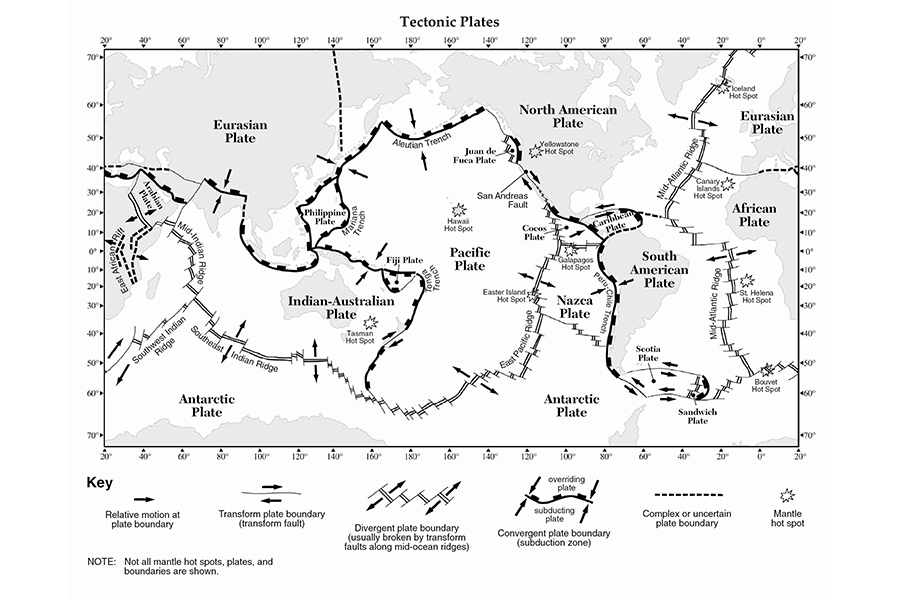
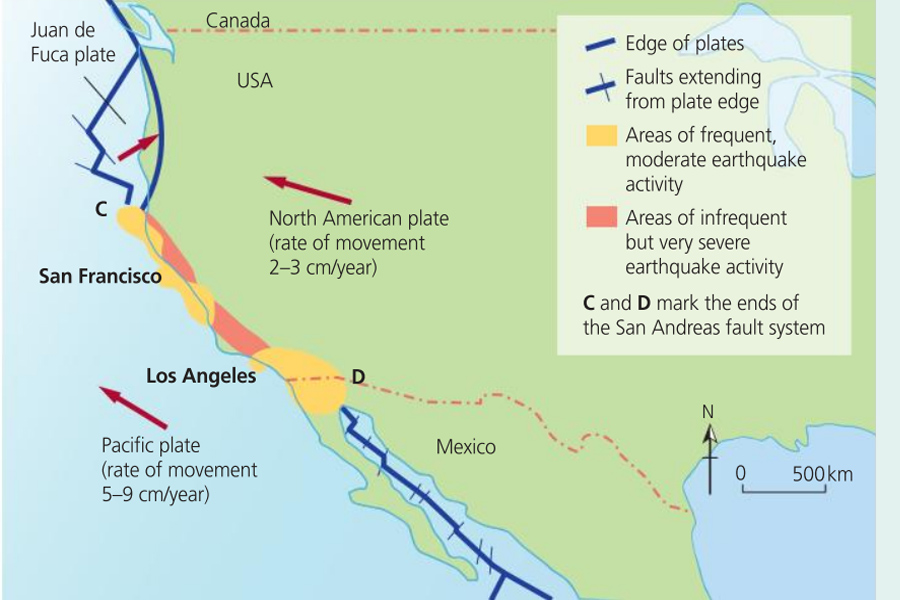
The vast majority of earthquakes occur along plate boundaries
Moment magnitude scale (MMS)
- identifies energy release
- its scale is the same as that of Richter, that is, 1–10 [?]
Mercalli scale
- It measures the intensity of an event and its impact.
- It is a 12-point scale where Level 1 is approximate to 2 on the Richter scale.
- It goes up to Level XII (approximately 8.5 on Richter).
Magnitude and frequency
Seismic records enable earthquake frequency to be observed, but these records only date back to 1848 when an instrument capable of recording seismic waves was first developed. Before that we have to consult historical records as to the date and the effects of the identified event.