Starter
|
Causes of tropical storms
|
Distribution
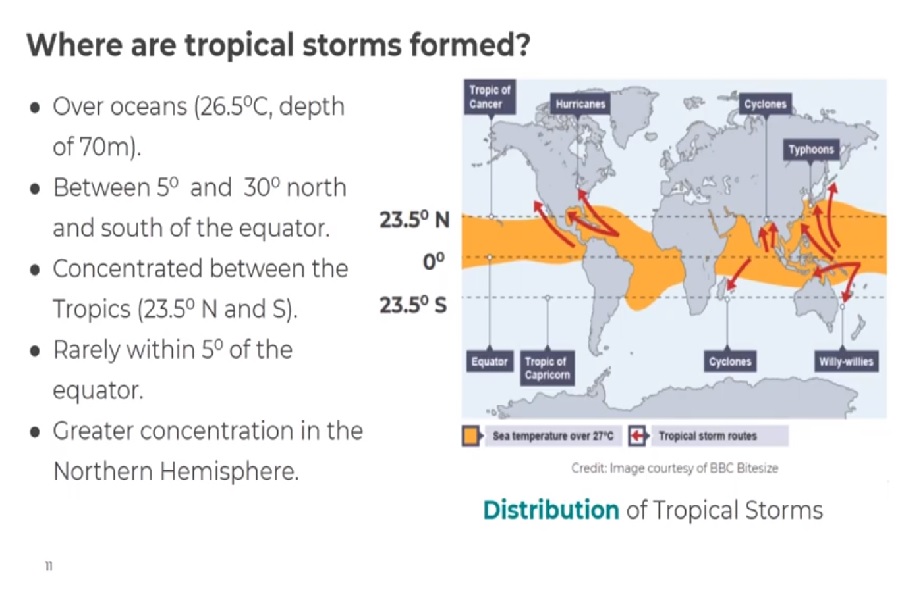
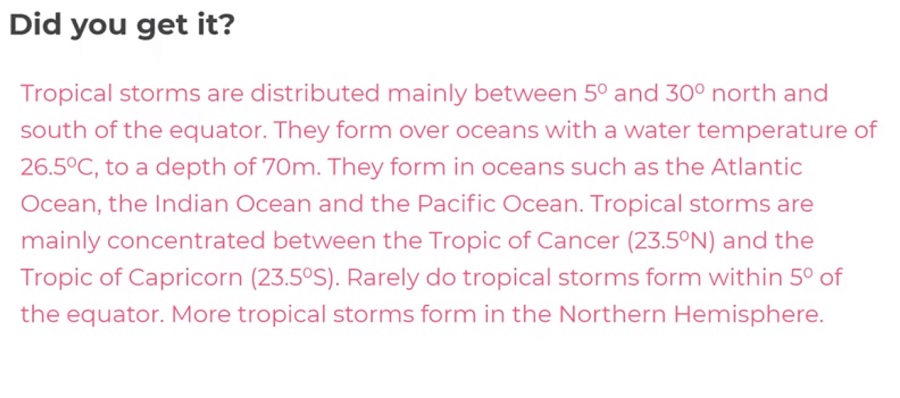
Where are tropical storms formed?
– Caribbean Sea/Gulf of Mexico area - hurricanes (11 % of all tropical storms)
– Western side of Central America (eastern Pacific) (17 %)
– Arabian Sea/Bay of Bengal area - cyclones (8 %)
– off southeast Asia - typhoons (1/3 of all storms every year occurring here)
– off Madagascar (southeast Africa) (11 %)
– off north-western (willy-willies) and north-eastern Australia (20 %).
|
Measuring tropical storms
Saffir-Simpson scale
- a five-point scale based upon central pressure, wind speed, storm surge and damage potential.
A scale 5 event, for example, has:
- central pressure at 920 mb or below
- wind speeds at 250 km/hr (69 m/sec) or greater
- storm surge at 5.5 m or greater
- damage potential that refers to ‘complete roof
failure of many buildings with major damage to
lower floors of all structures lower than three
metres above sea level. Evacuation of all residential
buildings on low ground within 16–24 km of
coast is likely
|
Impacts of tropical storms
The vulnerability of people to storm events depends upon a range of factors, both physical and human:
- the intensity of the storm (scale 1–5)
- speed of movement, that is, the length of time over the area
- distance from the sea
- physical geography of the coastal area – width of coastal plain or size of delta, and location of any mountain ranges relative to the coast
- the preparations made by a community
- warnings and community response.
|
Impacts of tropical storms
The major impacts that a tropical revolving storm can
have on an area are described below:
- Winds: often exceed 150 km/hr (over 250 km/hour in a scale 5 event.
- Heavy rainfall: exceed 200 to 300 mm, bringing about severe flooding, landslides and mudslides.
- Storm surges: High sea levels result when the wind- driven waves pile up and the ocean heaves upwards as a result of the lower atmospheric pressure.
|
Frequency of tropical storms
- The average lifespan of a tropical storm is 7-14 days.
- Every year around 80-100 such storms develop, with approx. 80% going on to become tropical revolving storms.
|
Predictability of tropical revolving storms
- Tropical storms can be predicted if monitoring and warning systems are in place.
- Geostationary satellites and land and sea based recording centres and aircraft gather data.
- Information is compared to computer models so that a path can be predicted and warnings issued if needed.
|
Activities
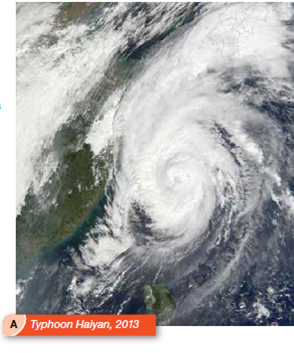 1. Look at photo A
- Identify the eye of storm
- Which hemisphere is the storm in? How do you know?
|
Activities
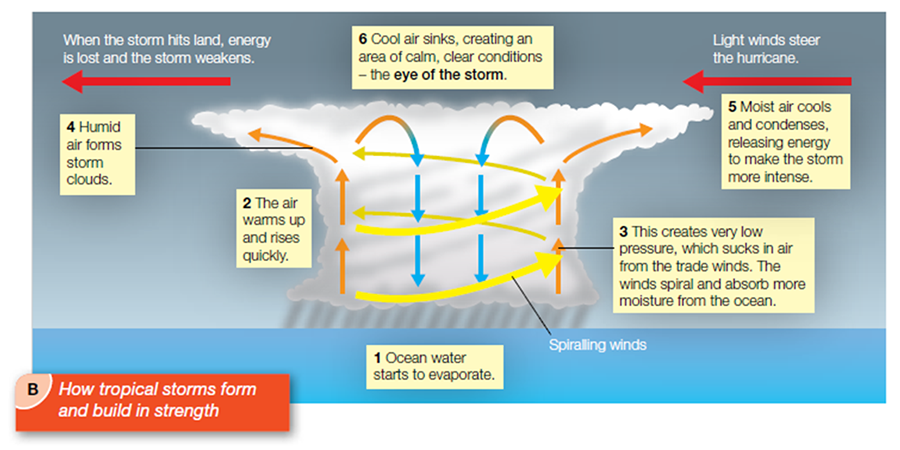
2. a Study diagram B. Draw a sketch to show the different parts of a tropical storm and the conditions needed for it to form. Add labels to show:
- the main parts of the storm, including the spiraling clouds and the eye
- the temperature and the depth of the ocean
- the speed of the winds
- how much rain can fall in one day
- how wide storms can be
- where they form in relation to the Equator
|
Activities
2. b Write a paragraph to explain how a tropical storm forms
|
Activities
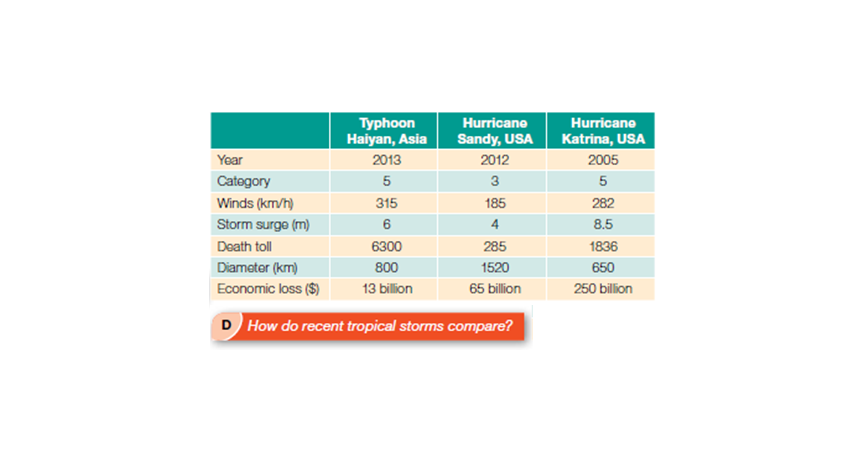 3. Study table D.
- Compare the death tolls of Hurricane Katrina and Hurricane Sandy, which both affected the USA
- Suggest reasons for the difference in the death tolls rot these two hurricanes
- Typhoon Haiyan affected parts of Asia including Philippines. Suggest why its death toll was higher than that of Hurricane Katrina whilst its economic lost was lower.
|
Practice questions
Describe the distribution of tropical storms. [5 marks]
Challenge: Outline the causes of the extreme weather conditions associated with tropical storms. (6 marks)
|
Practice questions
Describe the distribution of tropical storms. [5 marks]

|
|
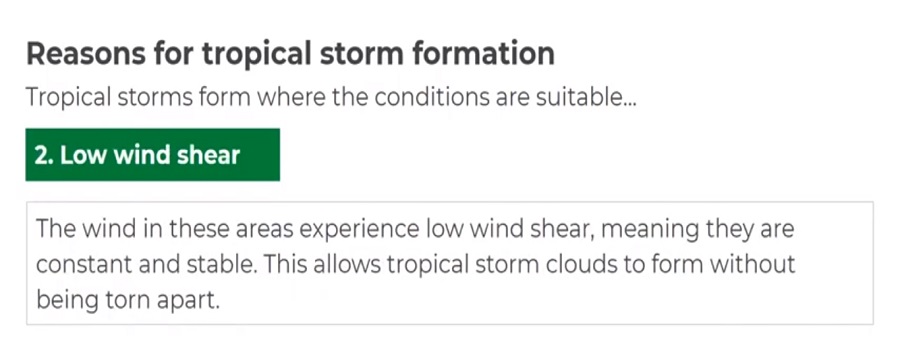
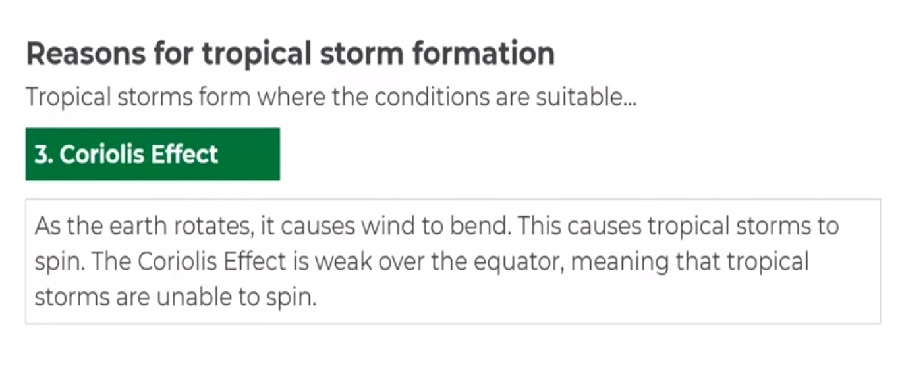
Reasons for tropical storm formation...
|
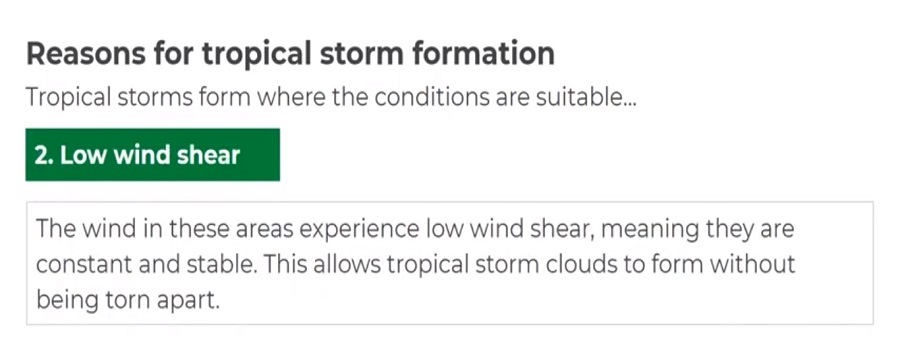
Reasons for tropical storm formation
Tropical storms form where the conditions are suitable...
|
|

|
|

|

 Learning outcomes:
 To be able to:
 Where are we on our specification?