




Book Online Geography Lessons.
Online Lessons Running Every Day in 2025/2026 by Qualified Teacher.
To book, simply browse my available lessons below.

Defining place
Online Lesson | 03 Nov 2026 | Start: 16:00 | DURATION: 1 HOUR Specification content
3.2.2.1 The nature and importance of places
The concept of place and the importance of place in human life and experience.
Learning outcomes
This lesson will help students to understand:
- How we define ‘place.
- What the difference between space and place is.
- How human geographers consider location, locale and sense of place.
Suggested timing
1 hour

Place identity
Online Lesson | 04 Nov 2026 | Start: 18:00 | DURATION: 1 HOUR Specification content
3.2.2.1 The nature and importance of places
- The concept of place and the importance of place in human life and experience.
- Factors contributing to the character of places.
Learning outcomes
This lesson will help students to understand:
- How we define ‘place identity.
- What elements make up place identity.
- How places can generate multiple identities.
Suggested timing
1 hour

Factors affecting place identity
Online Lesson | 06 Nov 2026 | Start: 16:00 | DURATION: 1 HOUR Specification content
3.2.2.1 The nature and importance of places
Factors contributing to the character of places
3.2.2.2.1 Relationships and connections
The impact of relationships and connections on people and place with a particular focus on:
either
- changing demographic and cultural characteristics
or
- economic change and social inequalities.
Learning outcomes
This lesson will help students to understand:
- How identity can be evident at several scales.
- How religion can foster a sense of identity in places.
- The meaning of agglomeration, suburbanisation, counter-urbanisation and regeneration.
- The effects of counter-urbanisation on places.
Suggested timing
1 hour

Insider and outside perspectives
Online Lesson | 10 Nov 2026 | Start: 16:00 | DURATION: 2 HOURS
Specification content
3.2.2.1 The nature and importance of places
Insider and outsider perspectives on place
Learning outcomes
This lesson will help students to understand:
- What is meant by the terms insider and outsider perspectives.
- What might be important factors in shaping insider and outsider perspectives.
- What is meant by social and spatial exclusion.
- What might be the causes of social and spatial exclusion.
Suggested timing
2 hours

Categories of place
Online Lesson | 11 Nov 2026 | Start: 18:00 | DURATION: 1 HOUR Specification content
3.2.2.1 The nature and importance of places
Categories of place:
- near places and far places
- experienced places and media places.
3.2.2.2.2 Meaning and representation
The importance of the meanings and representations attached to places by people with a particular focus on people's lived experience of place in the past and at present.
Learning outcomes
This lesson will help students to understand:
- What place signifiers are and how we attach meaning to places.
- What the terms near places, far places, experienced places and media places mean.
- How media places can contrast from the lived reality of a place.
Suggested timing
1 hour

Endogenous and exogenous factors affecting place
Online Lesson | 13 Nov 2026 | Start: 16:00 | DURATION: 2 HOURS Specification content
3.2.2.1 The nature and importance of places
Factors contributing to the character of places:
- Endogenous: location, topography, physical geography, land use, built environment and infrastructure, demographic and economic characteristics.
- Exogenous: relationships with other places.
Learning outcomes
- What endogenous factors are. How the physical site, the economic function and the cultural landscape of a place can alter the character of a place.
- What exogenous factors are and how they can alter the character of a place.
- How the shifting flows of people, money, technology and information around the world can affect places.
- Some examples of how globalization has led to de-industrialisation and fundamental change in some places.
Suggested timing
2 hours

Globalisation of place and global sense of place
Online Lesson | 17 Nov 2026 | Start: 16:00 | DURATION: 2 HOURS Specification content
3.2.2.1 The nature and importance of places
Factors contributing to the character of places
3.2.2.2.1 Relationships and connections
How the demographic, socio-economic and cultural characteristics of places are shaped by shifting flows of people, resources, money and investment, and ideas at all scales, from local to global.
Learning outcomes
This lesson will help students to understand:
- What is meant by a ‘global sense of place.
- What is meant by the terms ‘placelessness, ‘homogenised places and ‘clone towns.
- What global factors are driving these changes.
- What the terms ‘globalisation and ‘glocalisation mean.
Suggested timing
2 hours

Clone towns
Online Lesson | 18 Nov 2026 | Start: 18:00 | DURATION: 1 HOUR Specification content
3.2.2.1 The nature and importance of places
Factors contributing to the character of places
3.2.2.2.1 Relationships and connections
- How the demographic, socio-economic and cultural characteristics of places are shaped by shifting flows of people, resources, money and investment, and ideas at all scales, from local to global.
- The characteristics and impacts of external forces operating at different scales from local to global, including either government policies or the decisions of transnational corporations or the impacts of international or global institutions.
Learning outcomes
This lesson will help students to understand:
- What is meant by a ‘clone town and a ‘home town.
- How globalization and a ‘global culture might be responsible for the loss of high street identity.
- What the factors are that can be used to determine if a place has become a ‘clone town.
- How some communities have started to resist homogenisation of the high street.
Suggested timing
1 hour
Localisation of place
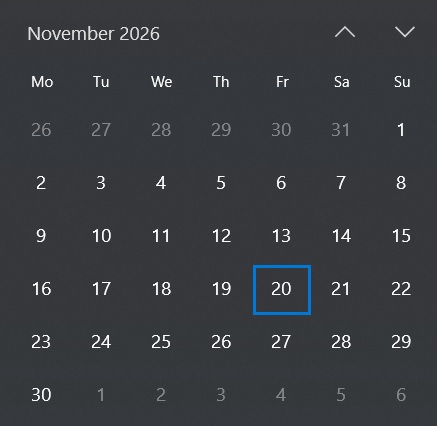
Online Lesson | 20 Nov 2026 | Start: 16:00 | DURATION: 1 HOUR Specification content
3.2.2.1 The nature and importance of places
Factors contributing to the character of places
3.2.2.2.1 Relationships and connections
- How the demographic, socio-economic and cultural characteristics of places are shaped by shifting flows of people, resources, money and investment, and ideas at all scales, from local to global.
- The characteristics and impacts of external forces operating at different scales from local to global, including either government policies or the decisions of transnational corporations or the impacts of international or global institutions.
- How past and present connections, within and beyond localities, shape places and embed them in the regional, national, international and global scales.
Learning outcomes
This lesson will help students to understand:
- What is meant by the term ‘localisation of place.
- What it means to ‘belong in the context of place, and what factors affect an individuals sense of belonging to a place.
- How places can promote physical and mental well-being.
- What the features and characteristics are of a ‘great place.
Suggested timing
1 hour

Meaning and representation
Online Lesson | 25 Nov 2025 | Start: 16:00 | DURATION: 1 HOUR Specification content
3.2.2.2.2 Meaning and representation
The importance of the meanings and representations attached to places by people with a particular focus on peoples lived experience of place in the past and at present:
- How external agencies, including government, corporate bodies and community or local groups make attempts to influence or create specific place-meanings and thereby shape the actions and behaviours of individuals, groups, businesses and institutions.
- How places may be represented in a variety of different forms such as advertising copy, tourist agency material, local art exhibitions in diverse media (eg film, photography, art, story, song etc) that often give contrasting images to that presented formally or statistically such as cartography and census data.
Learning outcomes
This lesson will help students to understand:
- The definitions of meaning, representation and perception of place and how these can relate to each other.
- How media can sometimes skew peoples perception of a place which may be far detached from the lived reality.
- What agents of change are and how they manage to change peoples perception of place.
Suggested timing
1 hour

Rebranding and regeneration
Online Lesson | 26 Nov 2025 | Start: 18:00 | DURATION: 1 HOUR Specification content
3.2.2.2.2 Meaning and representation
- Understand how external agencies, including government, corporate bodies and community or local groups, make attempts to influence or create specific place-meanings and thereby shape the actions and behaviours of individuals, groups, businesses and institutions.
- Understand how both past and present processes of development can be seen to influence the social and economic characteristics of places and so be implicit in present meanings.
Learning outcomes
This lesson will help students to understand:
- What is meant by regeneration and how this might be achieved through the processes of rebranding and re-imaging.
- How the regeneration process may not be in everyones best interests, and that there can be arguments both for and against regenerating places.
- What ‘flagship developments are and how they can form an important part of rebranding.
- An example of an urban rebranding scheme that has been implemented, why and how it was implemented and how successful it has been.
Suggested timing
1 hour

Re-imaging and regeneration
Online Lesson | 28 Nov 2025 | Start: 16:00 | DURATION: 1 HOUR Specification content
3.2.2.2.2 Meaning and representation
- Understand how external agencies, including government, corporate bodies and community or local groups, make attempts to influence or create specific place-meanings and thereby shape the actions and behaviours of individuals, groups, businesses and institutions.
- Understand how both past and present processes of development can be seen to influence the social and economic characteristics of places and so be implicit in present meanings.
Learning outcomes
This lesson will help students to understand:
- The role of the re-imaging process in urban regeneration.
- Why some places may generate negative perceptions through the role of media.
- How corporate bodies, community and local groups can successfully change peoples perceptions of place through re-imaging.
Suggested timing
1 hour

Use of qualitative sources in place representations
Online Lesson | 02 Dec 2025 | Start: 16:00 | DURATION: 1 HOUR Specification content
3.2.2.3 Meaning and representation
How places may be represented in a variety of different forms, such as advertising copy, tourist agency material and local art exhibitions in diverse media (eg film, photography, art, story, song, etc), that often give contrasting images to that presented formally or statistically, such as cartography and census data.
3.2.2.2.2 Quantitative and qualitative skills
- Students must engage with a range of quantitative and qualitative approaches across the theme as a whole.
- Quantitative data, including the use of geospatial data, must be used to investigate and present place characteristics, particular weight must be given to qualitative approaches involved in representing place, and to analysing critically the impacts of different media on place meanings and perceptions.
- The use of different types of data should allow the development of critical perspectives on the data categories and approaches.
Learning outcomes
This lesson will help students to understand:
- The difference between qualitative and quantitative sources of geographical information.
- What considerations must be made regarding reliability when using qualitative sources.
- What are the common qualitative sources of information used in presenting place characteristics and what their strengths and weaknesses are.
Suggested timing
1 hour

Use of quantitative sources in place representations
Online Lesson | 03 Dec 2025 | Start: 18:00 | DURATION: 1 HOUR Specification content
3.2.2.3 Meaning and representation
How places may be represented in a variety of different forms, such as advertising copy, tourist agency material and local art exhibitions in diverse media (eg film, photography, art, story, song, etc), that often give contrasting images to that presented formally or statistically, such as cartography and census data.
3.2.2.2.2 Quantitative and qualitative skills
- Students must engage with a range of quantitative and qualitative approaches across the theme as a whole.
- Quantitative data, including the use of geospatial data, must be used to investigate and present place characteristics, particular weight must be given to qualitative approaches involved in representing place, and to analysing critically the impacts of different media on place meanings and perceptions.
- The use of different types of data should allow the development of critical perspectives on the data categories and approaches.
Learning outcomes
This lesson will help students to understand:
- The difference between accuracy and reliability of data.
- How statistics can sometimes be misleading.
- The origins and uses of census data.
- The application of Geographical Information System (GIS) in the study of place.
Suggested timing
1 hour

Case study guidance
Online Lesson | 05 Dec 2025 | Start: 16:00 | DURATION: 1 HOUR
Specification content
- Local place study: exploring the developing character of a place local to the home or study centre.
- Contrasting place study: exploring the developing character of a contrasting and distant place.
- Place studies must apply the knowledge acquired through engagement with prescribed specification content and thereby further enhance understanding of the way students own lives and those of others are affected by continuity and change in the nature of places. Sources must include qualitative and quantitative data to represent places in the past and present.
- Both place studies must focus equally on:
- peoples lived experience of the place in the past and at present
and either
- changing demographic and cultural characteristics
or
- economic change and social inequalities.
- The choice in the focus of the study outlined above should be the same for both the local and distant place study chosen.

Local place study - history and background
Online Lesson | 09 Dec 2025 | Start: 16:00 | DURATION: 1 HOUR Learning outcomes
This lesson will help students to understand:
- The history and background of their local place and how this has shaped its character.
- What the physical and human characteristics of their local place are.
- How their local place may have changed over time.

Local place study - demographic and cultural changes/economic change and social inequalities
Online Lesson | 10 Dec 2025 | Start: 18:00 | DURATION: 1 HOUR Learning outcomes
This lesson will help students to understand:
- The demographic and cultural characteristics or the economic and social inequalities of their local place.
- How online mapping tools and GIS can be a powerful way of displaying geographical data.
- How we can draw some understanding of the character of a place through study of indicator data.

Local place study - media perception and representation
Online Lesson | 12 Dec 2025 | Start: 16:00 | DURATION: 1 HOUR Learning outcomes
This lesson will help students to understand:
- The way their local place has been represented in media.
- Insider and outsider perspectives of their local place.
- How their local place may be represented in artistic representations such as paintings, poetry or song.

Contrasting place study - history and background
Online Lesson | 16 Dec 2025 | Start: 16:00 | DURATION: 1 HOUR Learning outcomes
This lesson will help students to understand:
- The history and background of a distant place and how this has shaped its character.
- What the physical and human characteristics of the distant place are.
How the distant place may have changed over time.

Contrasting place study - demographic and cultural changes/economic change and social inequalities
Online Lesson | 17 Dec 2025 | Start: 18:00 | DURATION: 1 HOUR Learning outcomes
This lesson will help students to understand:
- The demographic and cultural characteristics or the economic and social inequalities of their distant place.
- How online mapping tools and GIS can be a powerful way of displaying geographical data.
- How we can draw some understanding of the character of a place through study of indicator data.
Contrasting place study - media perception and representation
Online Lesson | 17 Dec 2025 | Start: 19:00 | DURATION: 1 HOUR Learning outcomes
This lesson will help students to understand:
- The way a distant place has been represented in media.
- Insider and outsider perspectives of their chosen distant place.
- How that place may be represented in artistic representations such as paintings, poetry or song.